It’s amazing to me that when our bodies work the best
When we’re young
The muscles and sinews and fascia all flexible, fluid
We don’t realize it, appreciate it, yearn for it.
For the ease
Having muscle memory that remembers
Like riding a bike, throwing a pitch, ascending stairs, even, standing up
I remember being little, 8 years old
My mom’s “over the hill” birthday party
I delighted in black decorations, everywhere, black napkins, crepe papers, balloons
Black felt so…scandalous, ominous, powerful, maybe even
She was turning 40
The same age I am now
She had 3 children already well into our gradeschool years, tied up in sports and digging in the backyard and riding bikes to the country fort we had erected from fallen branches and dead things, all our bodies doing the things that young bodies do
So able, so free
Mom too
I wonder how much she thought about her body then
Because it’s all I can think about now
What it can do, what it cannot do, what takes work to do
Burns and scars and tightened chests from a round or two of cancer
Wondering how much of what I feel is about aging and how much of it is about how my life was interrupted, keeps being interrupted until the interruption becomes the norm
This body. Not carrying our child.
Wondering when it arrives come July, if my body will know it, if these arms are strong enough to do what a mom does for a baby
if my DNA will see itself reflected
and if the muscle of my heart – still weak from chemotherapy – will expand in new directions
Will it remember what to do, what it never thought it could or would do
The snow swirled around us, my Mom and me, as we slowly ascended the Santa Catalina mountains north of Tucson. January 2001. We were ill prepared in my little four-door Ford Taurus. I thought Tucson was sunny over 300 days a year? I’ve never heard of snow chains. We debated turning around, but I had to get to my new home on time, classes were starting nerves building, and I knew no one. So we downshifted and kept going. It’s one of those moments that only later I realize I’m lucky.
This was the semester I would figure some big things out.
This was the time in my life where I would understand that something transformative can leave a wake.
This was the turn key to realizing that the little world I thought was a complete and finite thing – it’s ruralness, whiffs of Baptists and Methodists and Jehovah’s witnesses alongside the whiffs of booze and poverty and steel mills and deserted mainstreets – was just one possible dimension.
It was like MTV’s real-world, except for hip urban kids who were even hipper misfit outdoorsy types who fed the western funnel spiders that were spinning tornadoes in our window sills, who set up camera traps to watch the ringtailed cats of the desert bound through camp at night, who planned every waking moment to feel and be and commune with the natural world because their home cities were just the first hopscotch on to greatness.
From the moment I arrived – after the slippery drive up the mountain – I realized I was an imposter. That musty old tent that we used in the backyard, a hand-me-down from my aunt in Iowa: child’s play. The handful of nights that I spent in it, twenty feet from the comfort of my own bed, nada. Sure, we had bugs and snakes in that Bible belt crevice between southern Illinois and eastern Missouri. But the worst of them were colorful, announcing their presence. We could easily avoid them. And, the Girl Scouts I had briefly considered joining shut down anyway, too little interest in learning how to properly build a fire and tie a knot, apparently.
Looking around at my cohort, I wasn’t supposed to be here anyway in Arizona, I thought. I should be with all my friends in far-flung places studying abroad. Australia or Dublin, London or Cairo. My near-fail of organic chemistry caused my grades to plummet and be denied from these programs, but it’s not like I had extra money lying around anyway to be considered part of a jetset crowd. Who was I kidding. So my semester in Arizona was a consolation prize to get out of the South Bend winter, only to land in another type of snowy mess. Rattlesnakes and all.
i love this idea of living with purpose as the actual living itself. the breathing, the being, the showing up, the settling in, the doing. rather than the pressure and perfection and overdoing it until i’m out of steam, motivation, and, well, purpose.
just on new year’s eve, as we watched a slightly odd show from mt. vernon with Black singers and performers and white and other races try and show how unified we can be as a country, i said to my mom, i wish i could be superlative at something like this. she agreed. it would be singing if she could choose. i think the same, it’s something i could take with me.
when i was little, i had this notion – perhaps we all did? – of just waiting to find my passion and then be discovered to a lifetime of being rich and famous. i don’t think i understood what that meant, beyond the faint notion of being in california, perhaps, or new york city. but i do think i understood that it was a one-way ticket out of my rural, everyone-in-your-business hometown where if one was successful, others would scratch and claw her down. i wanted out of that dynamic. i wanted more. i wanted a bigger pool. and clearer, more fantastical purpose. and typically, it seemed like a talent, any talent, was the ticket to propel me out – art, piano, volleyball, basketball, flute, dance, and on and on. what didn’t i try, might be the quicker question to answer here. and what if i was “ok” at things, not excellent, not superlative, just ok? was that enough?
it turns out that just stating i wanted out, to go far away, to try new things was enough (maybe combined with some smarts, resources, loving parents, and being white played into it too…!). and so i did.
living away from southern illinois now for 22 years, my mom sometimes laments that i’m not in touch with childhood friends or that when i’m home, i don’t reach out to them. i’m in touch with them enough in quiet ways. the ones that got out, or that understand why and how i did and don’t judge it or feel less than as a result. it’s the ones though who i run into in the grocery store here or casually see on social media who say, “wow, you live in california. that’s so awesome. you’re so lucky. you got out of this shithole.” and on and on. what is the appropriate response to this? “yep!” it makes me sad, like i can’t be authentic and talk about how i love my life, california, my job, the travels i’ve gotten to experience, because those people won’t necessarily be happy for me, i’ll be the one rubbing it in. instead, i feel as though i have to demur my accomplishments – “oh, it’s not that great. it’s not a big deal. you could do it too if you wanted!” how much of that is true. how much of it is feeling empathetic for a sad person who may or may not have figured out their purpose, how much of it is not wanting to be real or vulnerable only to open myself up for the hurts i experienced all throughout childhood.
i guess i hold both. wanting to be out and enacting my purpose. and then holding a nostalgia for family and home and the plot of land it sits on and the cornfields and smell of wet soil in april.
i’m the narrator, the main character, the protagonist of all of this. or i try to be.
it’s going to be a year like no other. isn’t that what we say every january 1? the resolutions, the betterments, the shedding of things that no longer serve us or perhaps never did and never will.
there’s a sneaking feeling i have that 2021 will be hard if not harder than 2020. haven’t all years been broken and battered in many ways? the feeling that hope is right around the corner, there is light at the end of the tunnel, the vaccines will allow us all to be back together in the streets unmasked and unmoored. i think we’re missing the nuance in that scene…maybe it’s 2022 instead by the time that happens (see story about the goal by dec 31 being 20 million americans vaccinated and the reality being 2 million). or 2024 in some other under-resourced places. this is real and the faster i work to wrap my head around it, articulate my boundaries, what is safe for me and my family, the quicker it is to be settled in the unfurling of time.
settled. perhaps that’s my word and desired state of being for 2021. it has a generally poor connotation in the US of A. she settled for her husband. they settled down into a bland routine life.
but settled for me is work to settle my body, my reactions, my mind. to live in a settled state that doesn’t see danger on the street, in the grocery store, in my own home. to settle my whiteness. to settle into becoming a parent, parenthood, and dropping perfectionism. to settle the laptop at 5pm and go for a walk, move, put together dinner. to settle in the house and feel like there’s a place for everything. to settle into acceptance of what my faults are and what his faults are and how the faults might shift and improve, ever so slightly and largely imperceptibly and how that is enough. to settle in my unquenchable thirst for learning and that i should always be doing. ABD. always be doing. hiking, cooking, cleaning, reading, yardwork, talking to a friend, missing my dad, caring for my mom, transferring my writing over to the new website, enriching, fixing, perfecting.
this is the year i take this seriously and i laugh a lot at the absurdity of it all.
Hospice is a verb. I realize this in 2020. Between the detritus, the deaths, the systems collapsing, the cracks and gaping holes letting the light shine on what’s always been there in the roots and crumbling brick. What will we leave in 2020, let die in its time, and what will we take with us? Capitalism, racism, sexism, ableism, all the isms. Is now the time to hospice these broken systems that keep breaking us all?
In the first stay at home order, holed up in refuge with a week’s worth of food, I shifted this paper to that pile and back and forth until finally, I dug in and went through it all. Every scrap and shred of my life that came in written form. I came across an article I had saved from a class in my undergraduate studies on aging. It explored the relationship between people who are in a grand generation – grandparents and grandchildren. Why do they get along so well. What is special about their relationships. What are these knowing glances they exchange, no words spoken. No words needed. It all comes down to the difference between being and doing. We are creatures – like many others – whose cycle of life goes from be to do and back to be.
In 2020, will this be the year we realize that we have gone too far as a whole into the deep end of the doing? Tipping the entire earth off her axis? The signs were sent. Her screaming back at us to slow down, stop, stop digging and mining and exhaling, dodge her wrath in the microscopic form of a virus and the macroscopic form of hurricanes, settle into the existence we were always meant to have anyway. Neighborhoods, connections, mutual aid, mutuality. Time to be still, contemplative, grieving, breathing, imagining, re-imagining. To be.
I marvel at how optimistic and resilient we are though. The ultimate shared strand of DNA is the sense of possibility, or a better day ahead, or light at the end. Ten months into a global pandemic. The loss will never be quantified, the stories never told, the children left behind. And yet, people wake up. They make breakfast, from scratch or from a box. They look out the window. They notice. They write songs. And poetry. And create new life with babies. And get married. They keep up regular dates with dear friends. They donate and run food drives. They get new pen-pals, Cheyenne elders and Connecticut nursing homes and all across the world. They grocery shop for neighbors and drop off meals. They petition and march. They vote. They commit. To each other, to a place, to something new, after the thunder cloud, and the break of day, to maybe, we hope, just…be.
I saw a video of a woman, holding a glass of wine steadily in her hand, as she backed up and tucked all of her limbs, including the hand with the wine, into a dryer and promptly shut the door.
This is what I want to do. To get over that claustrophobic feeling and to be held, cradled, nestled into the steady heat. On a low permanent press. Because I already have the spinning and spinning around feeling. What’s up is down, and what’s down is up. The tilt-o-whirl of being alive. The feeling like I’m about to pass out, that fuzzy grey crinkling into the corners of my eyes, like dust from the fallow fields in Oklahoma or from a stampede of horses on the plains. The heaviness. Each fiber of muscle and sinew going soft, gravity doing all the work to pull me down towards the earth’s core as it also spins and spins, mirroring me, or maybe I’m mirroring it. Letting go. Giving it away. The pain, sorrow, grief, lightness. It’s dark, the only noise a silent humming, maybe it sounds like a song to some people, or a meditative gong, or the same sound the ocean makes, the water and wind churning in a low rumble, loud and then subtle. Or it’s the womb, ending in the beginning. Going around and round. Doing somersaults in the tumult. Remembering in flashes that freedom, of movement, coming to, being able to start afresh. But all the inertia remains, the insults added up, the slights and slashes, so maybe I’ll stay here, instead, and wait it out.
You’re such a righteous asshole. Like that ex-boyfriend who has a better life on Instagram. Surfing at sunset, the golden hours giving his skin that perfect glow. When did he even learn how to surf? Oh right, the whole surf and ski in the same day. Fuck you, and your influencers, California. I can never get a campsite reservation when I want them. And all the dogs are adopted, the waitlist is 7 months deep. The lines at Boba Guys just never go away. Brunch is a full contact sport.
All your people who are wearing masks while talking with the cheese monger or picking up their wine allotments in Paso, or Napa, Mendo, or even, San Bernadino.
The taco shops. The estuaries and elephant seals. Sailboats and catamarans. Fancy donuts. Deserts. Fleetwood Mac. Kale and brussel sprouts. The first minority majority state. Vanguard of gay marriage. Clusters of misty coastal redwoods and still sequoias. Dungeness crabs. Drought. Ohlone and Chumash and 100 more that you, the state, fight tooth and nail to constrict and contain. Cattle ranchers. The underpaid and overworked farm workers. And yet your people travel great distances and pay to pick a peach, or an ollallaberry, whatever the hell that is. And try their hand at urban bee keeping on the roofs, perched above decrepit blocks full of human feces. Just look up, always look up, California.
The Inland Empire, self-proclaimed. Who the hell calls themselves an empire other than Californians.
The tallest peak in the lower 48 and the deepest crevice of death in the lower 48. Why do you need both superlatives?
I was sitting in my living room in San Francisco, sipping a cup of tea and watching some feel-good series about Black love. Dropping down into comfort enough, my body heavy.
And I felt it. Felt a memory in my left calf. A huge knotted charley horse, my leg seizing, out of nowhere, blurring my vision in pain.
And then, it’s like I’m walking over and around chards of glass, picking each one up, gingerly, trying to place it together to form the whole picture. One by one.
As I writhe, I see him writhing.
My Dad. In the hospital bed. in the room, right below the one I sit in now. Where, for years, when I got too afraid, or the heat lightning was too much, or the thunder too low in my belly, I would pad down the 17 stairs and into this room. My parents room. Waiting and watching them enough for my presence or stare, or their love, to wake them up, to receive the comfort I sought.
And now, I was the one who again needed comfort. And in my memory, the one I was reassembling, the one that I had tucked away, that feeling of hopelessness too much to stare down with both eyes open, it was making itself known in a visceral way. And, I was the one scrambling to give comfort.
Hospice left us with all types of medications. The morphine, the Ativan, haloperidol, the dexamethazone. They were all lined up in their bottles on the counter, under the kitchen spotlights, like soldiers waiting to be dispatched into a war zone.
And so it was.
My Dad, his calf, causing him so much pain. We tried to massage the intense knot, thinking dehydration was giving him a charley horse. Madly googling what it could be, if it was a blood clot then massaging it could make it detach, go to his heart and kill him instantly. And then on the urgent 12am phone line with the hospice nurse. It sounds like a blood clot, she said. You need to keep him comfortable. Use all the things. And call me back in 15 minutes. He wanted to go to the emergency room, to get comfort, relief, anything. And the nurse clarified that if we did that, hospice was over. And, in the early pandemic days, alone in a hospital room, he may die alone.
So like an untrained pharmacist, I crushed the Ativan with a mortar, titrated and measured the morphine, mixed it together into a syringe, grabbed another syringe full of the haloperidol, and ran back into the room to get it into my Dad’s mouth. 15 minutes passed without relief.
Pain filled the present moment and the horizon, a hopeless deluge. About this we knew very little. Every other moment of this hospice experience was hugs, holding hands, laughter, music, and rest.
After over 2 hours of this regimen, coiling and contorting, legs elevated, heating pads on, hands squeezing, phone calls, we were finally able to make my Dad comfortable, in and out of lucidness. All of us afraid that we would overmedicate him. That this was the turning point. We needed to say “the” goodbyes. Grief gathering in our hearts like water in a swamp. Heavy and murky.
Every 30 minutes we were up, remixing, re-administering. 2, 230, 3, 330 and on. Until the hospice nurse could come at 9am. His calf muscle had ruptured spontaneously, already shades of purple bruises. And he lived through it. He lived through so much.
These fragments and the relations that exist between one fragment and another.
I’m there and now I’m here. Massaging my calf, breathing again, sitting silently as I wait for it to pass, to see my Dad again, yet now, only in my memory.
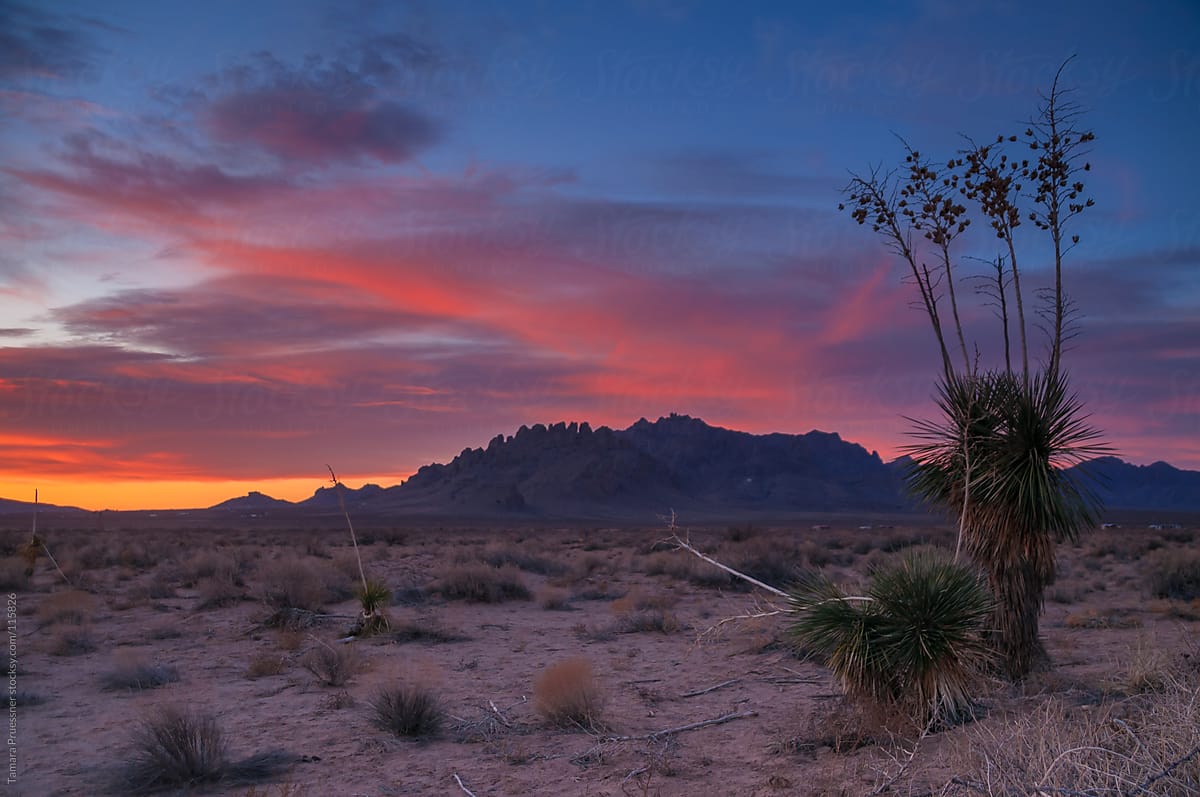
The sun, peaking over the sweeping steppe. Like a burst. Saying, here I am. Remember me. I was gone and now I’m back. I always come back for you.
Its long shadows tracing the mesas. The layers of earth, sand, wind, creatures, time. The buttes, petroglyphs – slow, intentional stories carved like news bulletins across time – a crystal forest, felled trees that became quartz. Iron and carbon adding in texture. the painted desert. El Desierto Pintado. A radiant canvas. Each hue of orange, terra cotta, poppy, clay, earth softening into the next. Like one broad stroke. A stroke of genius, of nature, of warmth, of love.
Settlers naming it a wilderness. Travelers naming it a place to stretch our legs. Navajo naming it home – Dinétah – since time immemorial. Pronghorn too. And lizards and snakes, sage and agave, the lichen part of an exhale, while the sun keeps on feeding them.





 keeping abreast | keeping a breast